
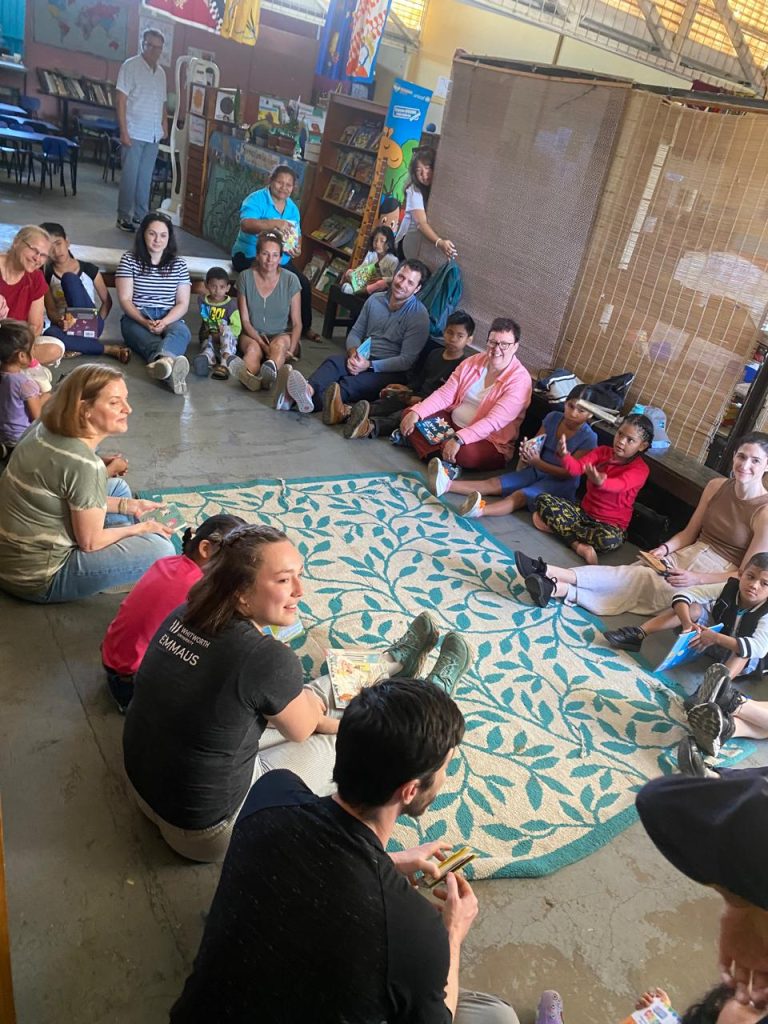
In the diverse world of education models, the Montessori approach stands out for its unique emphasis on fostering independence, curiosity, and a love for learning in children. One of the distinctive features of this model is the concept of “learning in circles,” a practice that nurtures community, collaboration, and holistic development.

The Concept of Learning in Circles
At its core, learning in circles involves bringing students together in a physical circle to engage in discussions, activities, and collaborative learning experiences. This arrangement symbolizes equality, unity, and inclusion, eliminating the hierarchical structure often found in traditional classrooms where the teacher is the focal point.
Origins and Philosophy
Dr. Maria Montessori, the founder of the Montessori education method, believed that children thrive in environments where they feel part of a community. Learning in circles reflects her philosophy that education should be child-centered, fostering a sense of belonging and mutual respect among students.
Benefits of Learning in Circles
1. Enhanced Communication Skills:
- In a circle, every student has an equal opportunity to participate, share ideas, and listen to others. This promotes active listening and respectful communication, critical skills for personal and academic success.
2. Fostering Collaboration:
- Circles create a cooperative learning environment where students can work together on projects, solve problems collectively, and support each other’s learning journeys. This teamwork builds social skills and a sense of community.
3. Encouraging Independence and Responsibility:
- With the teacher acting more as a guide than a lecturer, students in a circle take more ownership of their learning. They learn to manage discussions, take turns, and respect diverse viewpoints, fostering independence and self-discipline.
4. Creating a Safe Learning Environment:
- The physical arrangement of a circle helps to create a safe and inclusive space where students feel comfortable expressing themselves. This psychological safety is crucial for effective learning and personal growth.
5. Holistic Development:
- Learning in circles supports the Montessori aim of educating the whole child—intellectually, socially, emotionally, and physically. Activities are often designed to engage multiple senses and encourage movement, aligning with the Montessori principle of hands-on, experiential learning.
Practical Applications in the Montessori Classroom
In a Montessori classroom, circle time can be used for a variety of purposes:
- Morning Meetings: Starting the day with a circle meeting to set intentions, discuss plans, and build community.
- Storytelling and Discussions: Sharing stories, books, and engaging in thoughtful discussions to enhance comprehension and critical thinking.
- Group Activities: Conducting science experiments, art projects, or group games that require cooperation and shared problem-solving.
- Reflection and Mindfulness: Ending the day with a circle to reflect on learning experiences, share achievements, and practice mindfulness or relaxation techniques.
Challenges and Considerations
While the benefits of learning in circles are significant, educators must navigate certain challenges:
- Managing Diverse Participation: Ensuring that all students feel comfortable and are encouraged to participate can be challenging, particularly in larger groups or with shy children.
- Balancing Guidance and Freedom: Teachers must skillfully balance guiding discussions and allowing children the freedom to explore ideas independently.
- Adapting to Individual Needs: Recognizing and accommodating the diverse learning styles and needs of each child within the group setting is essential for the approach to be effective.
Conclusion
Learning in circles is more than just a physical arrangement; it is a reflection of the Montessori commitment to creating inclusive, collaborative, and dynamic learning environments. By emphasizing equality, respect, and community, this practice helps cultivate confident, independent, and socially adept learners. As educators and parents explore the benefits of this approach, they contribute to a broader understanding of what it means to educate the whole child, preparing them not just for academic success, but for life.
By embracing the principles of learning in circles, the Montessori model continues to inspire a more holistic, child-centered approach to education. This nurtures the potential within every student and fosters a lifelong love of learning.