Tag Archives: Volunteer

Team Tuesday Spotlight: Doña Antonia — The Heart of CRHF

Vol. 1

This post is part of our #TeamTuesday series, highlighting the incredible people who make the Costa Rican Humanitarian Foundation what it is.

By Jacob Killburg

Doña Antonia

María Antonia Zequeira García, affectionately known as Doña Antonia or simply “Abuela”, was born in Joyalpa, Nicaragua, the seventh of eleven siblings in a close-knit Catholic family. Life in Nicaragua was marked by hardship and limited opportunities. In 1992, at age 38, she left Nicaragua alone in search of work and safety, eventually making her home in La Carpio, Costa Rica. She later brought her two eldest children to join her and gave birth to her youngest daughter in Costa Rica.

Doña Antonia’s connection to the Costa Rican Humanitarian Foundation began by chance. One day she came to buy vegetables and was told they were looking for someone to step in as a cook. That was seven years ago, and since then, the Foundation has become her second home. She prepares breakfast and lunch for the CRHF team 7 days a week and for volunteer groups that sometimes amount to as many as 100 mouths to feed in one day. Despite this, she insists on being left to handle the task alone, and delivers a delicious meal to every plate. These meals carry her warmth and generosity, nourishing the body and the spirit of those around her. She describes herself as “a fish in water” when cooking, and at the Foundation she has found companionship and purpose.

Her path has been full of trials: losing her partner to COVID-19, navigating her daughter’s lifelong health challenges, caring for a son through leukemia, and mourning the deaths of siblings and other loved ones. Financial strain, medical hardships, and immigration struggles within her family have tested her strength repeatedly. Yet, she has carried herself with dignity and perseverance through it all.

Doña Antonia embodies the heart of La Carpio—resilient, resourceful, and community-minded. She has turned hardship into wisdom, grief into compassion, and work into a labor of love. She believes deeply in God’s strength, which she feels sustains her in the hardest moments, and she keeps hope alive for her children’s futures. In every corner of the Foundation, her presence, like a steady flame, is impossible not to admire.

The Power of One: How Volunteers Change Lives (Including Their Own)

Post #2 —

Series: The Heart of Humanitarian Action

When people think of humanitarian work, they often picture food drives, construction projects, or educational programs — but the true power behind every successful initiative is much simpler: people helping people.

At the Costa Rican Humanitarian Foundation (CRHF), we have seen firsthand that one person can change a life.
Sometimes forever.

From university interns and medical brigades to families traveling from abroad or Costa Ricans seeking to give back, volunteers arrive with one intention:

“I want to make a difference.”

What many don’t expect is that the experience changes them just as deeply.

Stories of Transformation

We have welcomed thousands of volunteers over the years — teachers, doctors, engineers, retirees, teenagers, and people who simply felt called to help.

They’ve helped with:

  • Food distribution for families experiencing homelessness in San José
  • Health education, nutrition support, and medical care in Indigenous communities
  • Early childhood enrichment and literacy programs in La Carpio
  • Construction and repairs for families living in unsafe housing
  • Mentorship, emotional support, and therapy-based play programs for youth

Every act — whether teaching a child to read, cleaning a wound, or building a safe place to sleep — becomes part of a lasting story of dignity and opportunity.

One volunteer said it best:

“I came to help others, but I left with a new understanding of humanity, compassion, and myself.”

Where Volunteers Make the Greatest Impact

💜 La Carpio: A Community of Strength

Once labeled one of Costa Rica’s most marginalized neighborhoods, La Carpio is now a place of resilience because people showed up — again, and again, and again.

🌿 Indigenous Communities (Bribri, Cabécar & others)

Support includes access to healthcare, education, culturally respectful development, emergency supplies, and constructing safe housing.

🏙 San José’s Homeless Population

Volunteers help distribute meals, hygiene kits, and warm clothing — and most importantly, share moments of human connection with individuals forgotten by society.

👶 Early Childhood Development & Education Programs

Play-based learning, Montessori-inspired environments, and emotional literacy programs help break intergenerational poverty.

Volunteering Creates Lifelong Advocates

Some volunteers return every year.
Others go home and raise funds, sponsor children, or start programs in their own communities.

Why?

Because once you’ve seen what dignity looks like in action — you don’t forget it.

Why Donors Make This Possible

While volunteers give their time and heart, donors provide what keeps the work going:

📖 educational supplies
🥦 food for families in crisis
🏥 medical support
👷🏽‍♀️ construction materials
📝 staff and logistics resources

Together — donors and volunteers form a bridge of compassion.

And that bridge changes lives.

❤️ Want to Create Impact?

Whether you give time, resources, or funding, your contribution becomes part of someone else’s story of hope.

Click here to join our volunteer program.

🟣 Donate or Partner With Us Today

CRHF 2025 3rd Quarter Newsletter

Introduction

The 3rd quarter of 2025 continued to be an intense and meaningful period as we served vulnerable populations and experienced a considerable uptick in migrant families seeking assistance from the Foundation.

In our last report, we highlighted those who make our work possible — volunteers, private donors, and funding partners. Thanks to them, our impact continues to reach thousands of individuals.

This report focuses on the work being done. We have been adapting our holistic development model across all Foundation functions — including accounting and reporting — to ensure transparency and clarity in how resources are allocated.

You may read more about our model at the link below:

CLICK HERE

As represented in the spiral image above, the model highlights the “rungs” necessary for individuals, families, communities, and nations to reach sustainability — not only materially, but emotionally and spiritually as well.

We are deeply grateful to all who make this journey possible. Thank you for sharing your resources, compassion, and belief in change. Together — we are the change.

__________

Volunteers

Volunteers are foundational to our work. The Costa Rican Humanitarian Foundation began with volunteers — people who recognized their privilege and felt a responsibility to share with empathy and compassion, leading to Right Action. During the rainy season the number of volunteer visitors decreases. We hope to inspire our visitors during the first semester of the year so that they will continue to support our work when they return home during the second half of the year.

A core part of our mission is to foster deeper awareness among visiting groups and individuals so they may make more informed decisions in their future personal and professional lives.

This quarter, we are delighted to highlight several volunteers:

                  •               Over the years, many visiting volunteers have gone on to become successful physicians. Some may remember Dr. Asa Tapley, formerly a volunteer. More recently, Anthoni, who volunteered here for a year, and we are glad to know he is now attending Rutgers Medical School.

Megan, one of our first volunteers in the early 90s, dreamed of becoming a neurosurgeon. After a tragic accident that caused nerve damage in her hand, she returned as a physical therapist and continues to serve with compassion and resilience.

More recently, we are fortunate enough to have volunteer Jake who applied his interest In medicine to help our Troy University group tabulate health data from 2013 and 2014 to determine quality of life. With the information we get we can work with the health staff at La Carpio.

                  •               Cat, a journalist from Wisconsin, spent a month with us, coordinating her stay to support the Michigan State University medical group. She provided essential translation services in La Carpio and later interviewed families in Río Torres. She is currently trying to do some follow up work for us. 

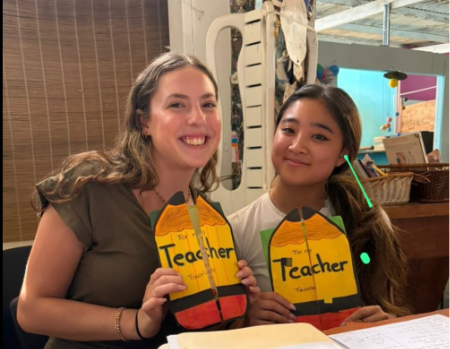
                  •               Shaye, from Chicago, returned after visiting previously with a volunteer group. She recently graduated high school and is teaching English, supporting administrative tasks, and inspiring others through her example. She has also created quite a support network back home — sharing messages of compassion, courage, and responsibility.

                  •               Dr. Joe, Nikola, and their son, along with Dr. Pat, continue to be some of our most committed supporters, returning consistently to help families and provide health services.

   •               Lars from Sweden also joined us during the last few months. He spend a couple weeks in La Carpio learning about our programs and getting his Spanish back to fluent. COnsidering his extensive volunteer experience in remote parts of Indonesia, we thought it of great support for him to also spend time with our indigenous friends in Amubri. He worked in education and on the new Library.

__________

Food & Water

Our Food Bank program, supported by Auto Mercado and additional partners, continues providing one of the most essential resources: nutrition.

Over 1,000 people per week benefit from this program. It is fully self-sustainable and has become one of our most successful social micro-enterprises — run by local collaborators from La Carpio.

We serve single-parent households, seniors, people with disabilities, and recently a growing number of refugee returnees.

Our distributions include fruits, vegetables, grains, proteins, and occasionally desserts. Beyond food, we are building healthy families, resilient communities, and long-term independence.

This quarter we also continued hosting pop-up soup kitchens for people living on the streets of San José — especially during cold rainy periods. This need has grown in connection with regional refugee challenges.

__________

Housing

The rainy season brings serious challenges — fires caused by electrical shorts, flooding, and landslides. We evaluate each case on site and ask families to collaborate in creating feasible, shared-responsibility solutions. Projects may include building retaining walls, structural reinforcement, improved drainage, and accessibility improvements.

A major emergency occurred in the Río Torres community, where families continue to face flooding and risk during heavy rains. We provided food, shelter, and safety — as formal emergency support from local institutions was unavailable.

A long-term solution requires relocating eight families. The estimated cost is $250,000 (approximately $30,000 per home). We currently have $45,000 pledged and are seeking sponsors to complete the project.

We also continue offering rent relief to families — particularly single mothers — facing temporary crises. Illness, medical expenses, and school-related challenges during the rainy season often disrupt already fragile budgets. Our food bank, education support, and wraparound assistance help break these cycles.

__________

Health

Our chiropractic partners from Minnesota continue returning to provide relief and care. Children have also built strong bonds with the family, engaging in fun and educational activities.

We have been working with partners at Troy University to digitize 20-year-old medical records from our former La Carpio clinic. This database — paired with new community health data — may reveal valuable long-term trends for public health research. 

We provided resources to ensure that our beneficiaries could have a healthy and happy rainy season wihc tends to bring the flu and other diseases.

__________

Health Education

We continue offering workshops on nutrition, disease prevention, hygiene, women’s health, and mental well-being.

A major challenge remains the culturally normalized heavy-carbohydrate diet (rice, beans, potatoes, pasta), particularly for individuals with diabetes and prediabetes.

Women’s support groups continue offering emotional support, education, and access to resources, especially for single mothers and refugees.

Our youth curriculum includes hygiene, healthy habits, emotional literacy, relationships, and self-advocacy skills.

We are also happy to announce that Amigos Eye Care has committed to visiting us again in 2026 to provide vital eye care for our populations. 

__________

Education

La Carpio

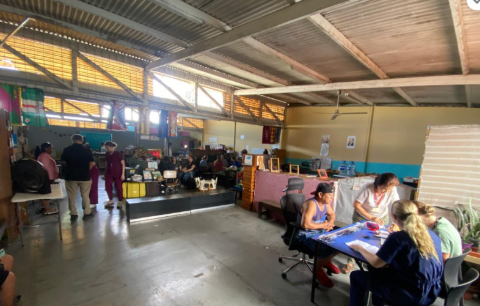
Our three centers — Montessori, Centro Modelo, and La Libertad — continue supporting children and adolescents in La Carpio.

                  •               Montessori Center serves ages 7–18 with English, tutoring, science, art, theater, and volunteer-led learning.

                  •               Centro Modelo continues graduating 4- and 5-year-olds every semester. Thanks to volunteers and Teacher Gloria, the newly organized space now reflects our updated educational model.

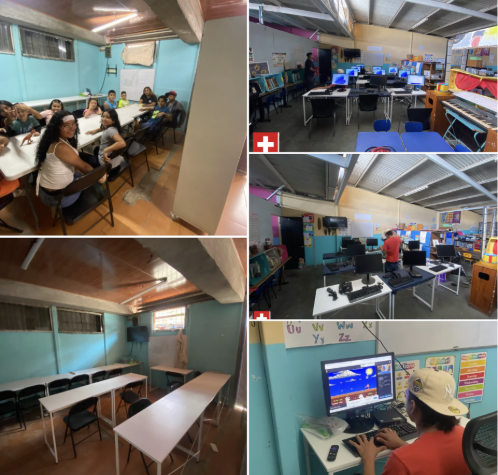
On the first floor, Teacher Marisol leads the new Centro Tecnológico La Carpio, featuring 8 computer stations and support from Universidad Latina. Enrollment is expected to reach 150 students per semester, offering skills in typing, digital literacy, Microsoft Office, and basic design.

                  •               La Libertad Center continues serving lunches and offering one of the few green community spaces — while providing safety and stability to families living in highly vulnerable areas.

Indigenous

We are also restarting work with indigenous communities in Talamanca — supporting adolescents, building classrooms, promoting literacy, and renovating a building into a community library and cultural learning space.

English Classes

We are expanding English programs to ensure graduating students have competitive employment skills — especially in tourism and call center sectors. Through “Pizza & English”, we motivate participation and demonstrate the practical value of language learning.

___________

SME & Capacity Building

We continue supporting women and refugee families returning from migration journeys with entrepreneurial tools rather than dependency. Micro-enterprises this quarter include pastry preparation, salon skills, knitting, assistant teaching training, and more.

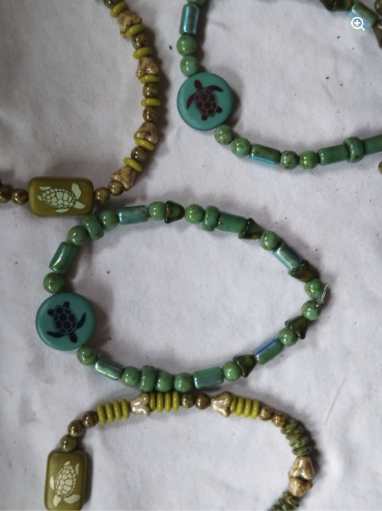
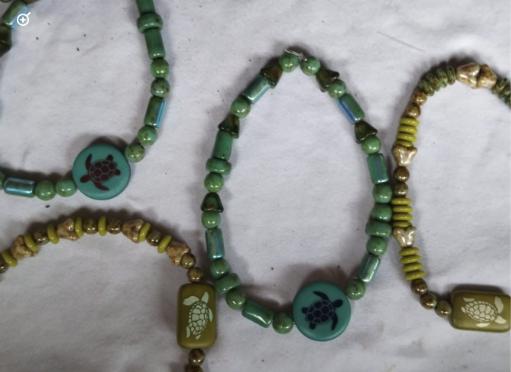
We also worked with grandmothers (“abuelas”) to produce artisan items with volunteers — strengthening cultural pride, skills, and economic empowerment.

__________

Empathy, Compassion & Right Action

Our work is grounded in empathy — imagining life in another person’s circumstances — and compassion — acting to alleviate suffering.

We teach and model Right Action: small daily acts of responsibility and kindness that create meaningful ripple effects in the world.

__________

Call to Action

As we look ahead to 2026, we invite individuals and groups to join us during winter, spring, and summer break programs. Volunteers may stay from one day to six months — combining meaningful service with Costa Rica’s natural and cultural beauty.

Our recurring donors provide stability and allow us to plan long-term. As we approach our 30-year anniversary in 2027, we thank you for sustaining this mission, especially during a time of global cuts in humanitarian funding.

__________

Casa Quetzal

Casa Quetzal continues developing into a vibrant space for reflection, learning, and cultural exchange. Volunteers enjoy the land, fresh air, and shared meals.

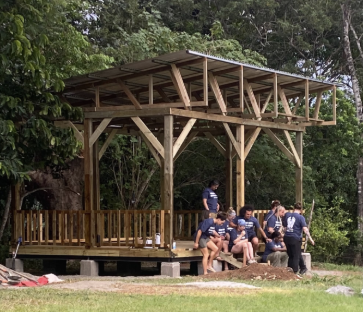
A gravel road and a caretaker’s home have now been completed. We are thrilled to announce a confirmed group for 2026 that will help further develop the Center into a hub for indigenous knowledge, sustainability, and experiential learning. The JD Sheth Foundation, which works in Latin America and Africa, will be the first large group of 15 to stay with us at the center. They will be building an indigenous traditional hut for meetings and other activities. 

We invite individuals and groups interested in participating or supporting this project to reach out.

__________

Conclusion

As we continue forward on this shared journey, we know the world feels uncertain for many. During such times, we return to our foundations: family, culture, community, creativity, health, service, and faith in collective good.

We look forward to our end-of-year celebrations — including our annual Christmas gathering — and to welcoming a hopeful New Year.

Thank you for believing in and sharing our dream.

CRHF 2025 2nd Quarter Newsletter

It has been a very busy 2025. Halfway through the year already, and we have a lot to tell! We would like to start by dedicating this newsletter to our supporters who continue to provide us with the resources to carry out our programs. During these very challenging times for everyone, your unfettered moral, financial, and volunteer support shows that you are the brave souls who rise above and provide a safety net during difficult moments. Thank you.

We’ve had a busy summer volunteer program!

🌱 Annual Fundraiser Update

At the end of our 2025 1st quarter newsletter, we announced our annual fundraiser. Unfortunately, due to a number of factors, we canceled the event. We refunded ticket fees to those who purchased them, and we are grateful to the Marriott Hotel for waiving charges.

📚 Youth Development & Education

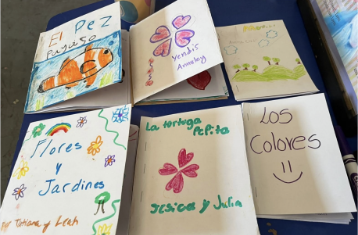
We continued our work in youth development, providing tutoring and supplemental support that aligns with the public school curriculum, including English, math, science, history, art, and theater.

We were very excited to finally receive the computers for our computer lab! Donated by our dear friend Julio, we can now offer introductory classes in Word, Excel, and typing to our beneficiaries. This program, led by Marisol, is helping us expand our capacity-building operations. The computer lab is housed in the Centro Modelo building next to the police station.

🎨 Volunteer Support & Improvements

Spring break brought a group of kind and caring volunteers to our centers in La Carpio. They helped with various tasks, including painting the Centro Modelo and the police station.

The Centro Modelo and all our centers received much care during this time. Spring cleaning brought a fresh look for our beneficiaries and volunteers to enjoy. We cleared out two storage closets, creating better spaces for Drs. Joe and Patrick and friends to carry out their chiropractic work.

👵 Abuelas & Community Theatre

The abuelas continue to put on new and creative plays sharing their stories. These performances inspire and provide emotional support to the senior population of La Carpio.

📲 Social Media Initiatives

Last year we featured Success Stories from the Field, highlighting how our work creates sustainable solutions. This year, we’ve launched a new series on Early Childhood Development, aiming to create a more educational and inspiring social media space. Don’t forget to like, share, and tag us!

🛏 Bunk Bed Program

We continue to provide bunk beds through one of our critical needs programs. While demand is not what it was when we started 20+ years ago, we still find urgent situations in La Carpio and with new arrivals that require improved sleeping conditions. Thanks to all the volunteers who participate—a simple act can change a life.

🫱 Volunteer Education & Partnerships

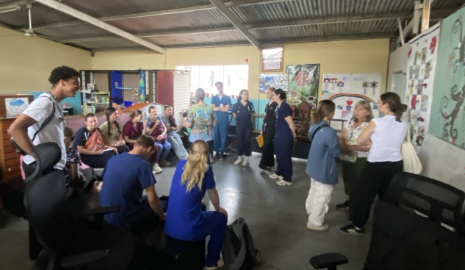
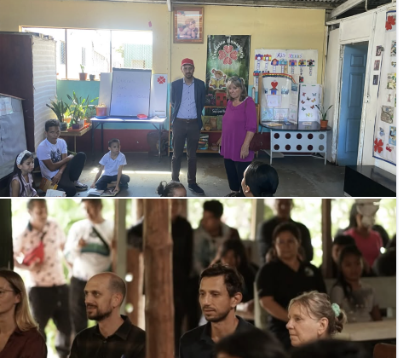
As part of our secondary mission, we work with volunteers to show them the realities we live every day and foster greater sensitivity to our beneficiary populations. We demonstrate our model of development and discuss the challenges faced by La Carpio, Costa Rica, and beyond.

We were excited to welcome for our summer volunteer program:
• Franz and Elizabeth, who brought us several volunteer groups this year that have greatly contributed to youth development. Their ongoing support has been vital in enriching the educational experiences of our children.
• A wonderful group of middle school volunteers from the European School. We thank them for their fundraising efforts, donations, and the work they did painting the computer lab and police station, as well as supporting youth development.
• Jacob, a pre-med individual volunteer, is sorting through years of medical records from our former clinic. His work helps preserve our legacy while gaining valuable insight for his medical career.
• Friends from Central Connecticut State University, who contributed to painting efforts and learned about our community.
• Texas Tech honors students, who shadowed our collaborators across food, shelter, health, education, and sports programs. They also gave a professional presentation to their fellow scholars about our main pillars of food, shelter, and health.

💛 Health, Wellness, & Relief

Our health education program has been a key focus this quarter. Led by Gail and Steven, these sessions provide preventative healthcare education, teaching about:
• body systems and organ function
• healthy nutrition, including using smoothies for better health
• the benefits of honey and other nutritious foods
• hormones related to menopause and other health concerns

Steven creates helpful visuals, and together they answer participants’ questions to promote better health awareness.

Our visiting doctors program returned, and alongside it we distributed hygiene kits to reinforce the importance of self-care and prevention.

Our partnership with Visit.org resulted in the donation of 50 teddy bears, which have already been distributed to our regular students, and the hygiene kits that complemented our health outreach efforts.

Our elderly population especially benefited from the interaction with the yoga teachers from Lakshmi Rising, who helped them gently stretch dormant muscles, bringing comfort and vitality.

Our chiropractor friends Joe, Patrick and their spouses Nicolle and Ericka, have been a delight to host as part of our family volunteer program. They have supported youth development and the bunk bed program.

🪶 Casa Quetzal

We have some very exciting news coming for Casa Quetzal. We have been a bit quiet on this, but we continue to open our doors to the world from our Casa Quetzal Conference and Retreat Center.

💬 A Final Word

Overall, we had a productive and inspiring spring 2025. We are deeply grateful for everyone who visited and supported us during these challenging times. We always aim to make visits mutually beneficial—enriching both visitors and our community.

Our programs support over 500 youth in La Carpio through education and sports, and we provide fresh fruits, vegetables and meats, home improvements, emergency medical care, seed money for small business enterprises, and emergency relief to over 500 people a week.

👉 Please consider supporting our work this year—whether through a donation or volunteering. Your help ensures we can continue addressing food security, safe housing, stronger health, quality education, sports, and emergency relief.

📧 Contact us at fundacionhumanitariacr@gmail.com to learn how you can help.
We offer tax-exempt donation options in both Costa Rica and the United States.

Thank you for your continued generosity and for shining your light when it’s needed most!

Make a Difference This Summer 2025: Volunteer with the Costa Rican Humanitarian Foundation

If you’re seeking a meaningful way to spend your summer, consider joining the Costa Rican Humanitarian Foundation (CRHF) in our mission to uplift vulnerable communities across Costa Rica. Our summer volunteer program offers a unique opportunity to immerse yourself in local culture while contributing to impactful projects in education, healthcare, and community development.

🤝 Why Choose CRHF’s Summer Volunteer Program?

Established over 30 years ago, CRHF has been a cornerstone in providing support to marginalized populations in Costa Rica. Our summer volunteer program is designed to engage individuals in hands-on projects that address real community needs. Whether you’re passionate about teaching, healthcare, or infrastructure, there’s a place for you to contribute meaningfully.

🏥 Health Initiatives

In the summer of 2024, CRHF collaborated with medical students from Michigan State University to provide healthcare services to over 300 patients in just four days. Volunteers assisted in medical consultations, referrals, and treatments, showcasing the profound impact of dedicated service. 

📚 Educational Outreach

Education is a powerful tool for empowerment. CRHF volunteers have the opportunity to teach English, lead STEM workshops, and provide academic support to both children and adults. By fostering a love for learning, volunteers help pave the way for brighter futures.

⚽ Sports Program: Building Confidence Through Play

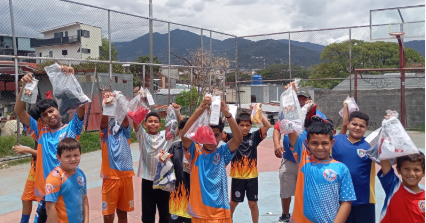
CRHF’s summer volunteer program emphasizes the value of sports as a tool for empowerment. Volunteers help run soccer clinics, organize community tournaments, and lead recreational games that foster teamwork and confidence. In underserved areas like La Carpio and Bajamar, sports provide an outlet for youth to stay active, develop discipline, and build social skills in a supportive environment. As one volunteer put it, “Seeing the kids light up when we arrive with soccer balls and games is one of the most rewarding parts of the program.”

🌱 Youth Development: Nurturing Growth with the Education

In addition to sports, CRHF is deeply committed to youth development through early childhood education and personal empowerment. Volunteers have the chance to support programs based on the Montessori method, a child-centered approach that encourages exploration, independence, and self-directed learning. At CRHF’s educational centers, young children engage in hands-on activities that develop cognitive and emotional skills in a nurturing environment. This approach fosters resilience and curiosity—qualities that can transform their futures. Volunteers often assist in classrooms, help design creative learning materials, and offer one-on-one attention to children in critical stages of development.

🛠️ Community Development

Beyond education and healthcare, CRHF’s summer volunteer program includes projects aimed at improving community infrastructure. From building homes to enhancing public spaces, volunteers work alongside locals to create lasting change. 

🏞️ Supporting Indigenous Communities

CRHF’s summer volunteer program also extends to indigenous regions such as Alto Chirripó, Quitirrisi and Talamanca where volunteers support culturally respectful and sustainable initiatives. Projects often include improving access to education, helping with basic infrastructure, supporting traditional health practices, and engaging in cultural exchange. Volunteers hike into remote areas to deliver supplies, assist in school settings, and collaborate directly with community leaders to identify priorities. These experiences are deeply enriching and offer a rare opportunity to build relationships grounded in mutual respect and learning. As one participant shared, “Working alongside the Cabécar people opened my eyes to a whole new way of life—and a deeper understanding of what it means to serve.”

🌟 Volunteer Testimonials

Volunteers often describe their experiences with CRHF as life-changing. One participant shared, “This trip has definitely changed my life and others forever.” Such testimonials highlight the profound personal growth and community impact achieved through the program.  

📸 A Summer to Remember

CRHF’s social media channels are filled with snapshots of volunteers engaging in meaningful work and forming lasting bonds. An Instagram post from August 2024 captures the essence: “Wrapping up an incredible summer filled with community, collaboration, and care!” 

🌍 Join the Movement

Embarking on a summer volunteer program with CRHF is more than just a trip; it’s a journey of personal and communal transformation. By dedicating your time and skills, you become part of a legacy of positive change in Costa Rica.

📅 How to Get Involved

Ready to make a difference this summer? Visit CRHF’s volunteer page to learn more about our summer volunteer program and how you can apply. Embrace the spirit of “Pura Vida” and contribute to a cause that truly matters.

CRHF 2025 1st Quarter Newsletter

Costa Rican Humanitarian Foundation
2025 First Quarter Newsletter
Working together for a better world

Volunteers

After a busy end to 2024, we bid farewell to our Amigos Eye Care friends. Thanks to their efforts, over 300 people received eye care. Before they left, we visited our indigenous friends in Quitirrisi to share knowledge and culture with our visitors from the Pacific Northwest.

In January, we welcomed a powerful group of young women from Rutgers University. They built and delivered bunk beds and participated in youth development and food bank programs. They also had the chance to learn about our Model of Development.

Gregerly, an individual research volunteer from Belgium, joined us to gather data for his thesis on disparities in development in Costa Rica. We were happy to connect him with local communities and share our insights. We look forward to sharing the results of his research.

Our January clean-up and reorganization efforts in the La Carpio centers were a success. Volunteers from the University of Connecticut, Global College and the Lakshmi Rising yoga group helped us clean, sort, and hold garage sales. Thanks to them, the centers are now bright, functional spaces for sharing, learning, and caring.

Long-time individual volunteer Stana returned once again and made a huge impact. Her background in education supported our local teachers, and her organizational efforts helped all the centers look their best!

Also with the creativity of full time volunteer Steven we gave regular classes on self help health care to children, adults and elderly.

With the local police station in La Carpio, we worked to raise morale. Alongside volunteers from Pepperdine and the yoga group, we painted the holding cell, practiced yoga, and held space for conversation and healing.

Fleur, a Belgian architecture student, visited to learn more about indigenous architecture. She supported many of our programs and also helped welcome a group to Casa Quetzal.

USC brought joy during a pre-Easter egg hunt, where children painted eggs and experienced the unique magic of a CRHF Easter Bunny celebration!

Lakshmi Rising continues to support us with yoga retreat groups that understand the importance of collective well-being. Ubuntu: I am because we are.

Our chiropractor family friends returned to provide much-appreciated services to our La Carpio populations. They treated 60 patients a day over 5 days, offering care, relief, and connection. We’ve begun building a relationship for ongoing follow-up support with patients they saw last year, and we’re excited to welcome them—and more of their family and friends—again in the coming months.

Programs

Montessori & Environment

Our Montessori program continues to thrive—providing a nurturing space for children to learn and grow. This quarter, we focused on environmental education, nature care, and science activities like experiments and theatre.

La Libertad

We were thrilled to welcome back the Alan Stevenson School from NYC for the 14th year! They repaired a road, engaged with our youth, and donated a laptop and projector.

The Saturday Program welcomed two amazing local Tica volunteers, Adriana and Allona, who helped with activities and got to know La Carpio. Adriana previously volunteered as an interpreter for the Amigos Eye Care team.

Thanks to a donation of clay from Kattia, the children made beautiful creations—everything from butterflies to cups!

Uvita Family Wellbeing Center

We continue to be challenged by the Uvita Family Wellbeing Center, and we continue to find creative and innovative solutions. We have now partnered with a local woman who is working on securing all the official permits to open the center as an after-school program. We’ve agreed that at least 20% of the students will receive scholarships based on community need. With this approach, the woman will develop a small business, and we can continue to support the youth who need it most. We hope to resume collaboration with volunteer groups in the area in the coming years.

Sports League

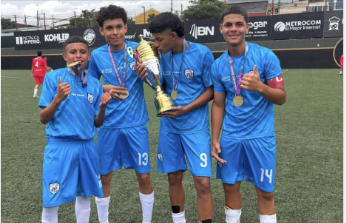
Our sports league now serves 150 youth and remains one of the strongest in the country. In a community where kindness can be misunderstood as weakness, our youth now have strong, positive role models and a healthy outlet.

Bunk Beds, a New Car & Evolving Needs

Our bunk bed program continues on an as-needed basis. As La Carpio progresses, the needs are shifting from basics like food and housing to more complex initiatives—job training, capacity building, empathy, and right action.

Thanks to our generous supporters, we purchased several mattresses and now have a modern, fuel-efficient CRHF vehicle to help with deliveries.

Food Program

The Auto Mercado Food Program continues to run 365 days a year. In 2024, we provided over one million food rations, ranging from simple sandwiches to full baskets.

To thank Auto Mercado, we created a collage of gratitude from our beneficiaries.

Global Connections through Montessori

Our Montessori kids received a heartfelt surprise: 100 cards of love were created for children in the U.S. who lost their homes in hurricanes and fires. These cards will accompany stuffed animal comfort toys heading to Tennessee, North Carolina, and California.

And our kids received their own stuffed animals as a beautiful gesture of kindness returned.

Centro Modelo

With help from Lakshmi Rising, Stana, Global College, and others, we reorganized and beautified Centro Modelo. We also welcomed a new teacher, Gloria, who is stepping in as Marisol pursues her next adventure.

Computer Lab

Responding to evolving community needs, we’re launching a new tech education initiative. With ten donated refurbished computers on the way, we’ll offer weekly lessons in typing, Microsoft Office, and even basic website building.

Indigenous Connections

In partnership with Bob, Noel, and others, we visited Amubri with book donations for Noemi—continuing a relationship that began with Gail’s Peace Corps work in 1979.

Fleur’s architecture journey continued with a visit to Leonel and Jenny of the Cabécar community. They are building an arts and crafts store with local redwood in front of the Lucas Drummond Cultural Center, which CRHF helped build in memory of Lucas.

We’re excited to support this initiative and look forward to sending visitors.

Casa Quetzal

Casa Quetzal continues to evolve naturally. We’re preparing the land to welcome future groups, while focusing on sharing indigenous knowledge and collaborating with our Huetar neighbors.

During spring break, we hosted groups from Georgia State University and North Florida State University. They studied topics such as indigenous education, sustainability, and rights.

We’ve also welcomed individual volunteers like Fleur and Stana, all of whom agree: Casa Quetzal is a sacred space for reflection, healing, and community.

Highlights & Happenings
• We finalized our 2024 Year-End Report and “2024 in Numbers”—check them out on our website clicking here.
• We joined the Women’s March on March 8th representing La Carpio.
• Gail participated in the Wells Mountain Initiative board meeting. WMI continues to support CRHF through 501(c)(3) fiscal sponsorship—without charging fees.

Collaborators

Our incredible team continues to shine:
• Fatima and Angelica provide outstanding care and tutoring in Montessori.
• Doña Antonia keeps everyone well-fed with nutritious meals.
• The food bank crew—Ana, Harold, Milagro, Alcides, and a growing young team—are thriving in their micro-enterprise model.
• Our new Centro Modelo teacher is building her capacity while honoring the work Marisol left behind.
• The La Libertad program remains strong, offering after-school support and weekend activities.

Gail and Francisco continue to handle administration and fundraising.

Due to continued support of our major donors we continue to provide hunger preventión, rent relief, schooling, counseling and small business support for single mothers, special needs children, refugees, elderly and unemployed men.

Together, we honor our diverse backgrounds and beliefs in our shared mission to build a better world.

Looking Ahead

Casa Quetzal is becoming the retreat and conference center Gail envisioned—offering a place to heal, grow, and collaborate.

We’re excited to keep growing in La Carpio and beyond. We’ll continue to support indigenous communities through education, health, culture, and economic opportunity.

Next month in May, we will be hosting our Annual Fundraiser Gala. We would like to invite everyone to join us on Sunday May 11th at the Hotel Marriott in San Antonio de Belen. The hotel has been a supporter of the CRHF from the days of the Street Kids program, where they offered many their first jobs in the kitchens and others.

Thank You for Sharing Our Dream! We can’t wait to see what the rest of 2025 brings.

CRHF Fourth Quarter Newsletter

The last quarter CRHF newsletter of 2024 is full of activities and projects.

Our thrid quarterly CRHF Newsletter update highlighted numerous successes and our ongoing upward spiral model work. We focused on health, health education, general education, sports, hosting a family from France/UK, building bunk beds, and much more.

For the final quarter of 2024, we proudly inaugurated a health clinic created and managed by Francisco in collaboration with the local indigenous association, the Ministry of Employment, and the CCSS. This project was financed by the Swiss Embassy in Central America and the CCSS.
Read more about the clinic here.

We also unveiled the new CRHF HQ: Casa Quetzal Retreat and Conference Center, a developing project designed to host volunteers and beneficiaries while focusing on preventive health, health education, peace, and collaboration.
Read more about it here here.

Our food program continues to provide over 2,000 people with nutritious meals every week, laying the foundation for their independence. Additionally, we offer dietary and health education to beneficiaries through this program.
Learn more about it here.

In October, Gail was invited to be a keynote speaker at the Sustainability in a Global Environment Conference hosted by Troy University. She shared the stage with experts from PROCOMER, Universidad Fidélitas, and other distinguished professionals.

Children’s Programs

We resumed our monthly children’s program for the youth of Uvita. Looking ahead to 2025, we aim to expand this initiative and welcome volunteer teachers and donors to support its relaunch. The program, paused during the pandemic due to funding shortages, costs approximately $800 per month to operate.

In September, we celebrated Children’s Day with movies, popcorn, and snacks. Nearly 800 youth enjoyed a leisurely day.
See part of the celebration here.

Later in the month, we participated in Costa Rica’s Independence Day festivities on September 15th, which included dances, costumes, faroles, and a lively parade featuring thousands of youth from neighboring communities.
View highlights here.

Volunteer Contributions

In October, a group of volunteers from Ohio delivered a generous supply of school materials. The children expressed heartfelt gratitude, and the volunteers learned more about our Model of Poverty Reduction and community efforts.
See their visit here.

On October 12th, we celebrated Gail Nystrom’s 75th birthday with collaborators and youth from La Libertad. It was a joyous day filled with dancing, singing, and heartfelt moments.
See the celebration here.

We welcomed the Yoga Teachers from Lakshmi Rising lead by Liz. We have been working on strengthening the physical and mental health of our beneficiaries through different meditation, breathing and yoga techniques. This will be Lakshmi’s second season with the CRHF and we look forward to building this relationship into the future.

Other notable volunteer contributions included:
• Stephen, long-term individual volunteer, continues to support our regular activities, give english classes and invent creative ways to help educate youth.
Hannah from West Virginia, having never left the states and who braved new experiences to work with youth development.
Valeria, a psychology student, who provided mental health resources during her university service.
Keren Hernández from the University of South Carolina, who conducted PhD research on food security among refugees.
Learn more about their contributions.
• Adriana and Ramon who came in during the holiday’s and provided interpretation for the Amigos optometrist medical crew.

We also hosted a multidisciplinary group through a partner organization. Their visit, centered on health and health education, included creative puppetry workshops to engage communities.
See more here.

Success Stories


• In November, we secured funding to provide a new home for a family of eight in La Carpio. Thanks to our donors, the younger children now have the opportunity to grow up in a healthier environment.
Read the full story.
• Alan, a beneficiary we have supported for years after a workplace accident, received a prosthetic leg and is walking independently again.
See his progress.
• We also bid our farewell and safe passage to our longtime collaborator Jairo. He has been with us for almsot a decade working in the foodbank and other activities. He is off to Spain supported by the IOM and the CRHF. We will be here to ensure he gets settled in safely. 
View more here.

Partnerships and Events

In late October we were invited to a NGO Fair hosted by ServiceNow focusing on CSR. We were able to showcase our work, alongside other NGOs, to the employees of the company. We are working on increasing our collaboration in the CSR field with the numerous offshore and local companies in Costa Rica.
View more here.

We hosted chiropractic care for nearly 300 beneficiaries with the help of new friends from Minnesota. Feedback has been overwhelmingly positive, and we look forward to their future visits.
Read more.

The year ended with our annual Christmas Parties, bringing joy to over 800 youth with gifts, snacks, and activities—made possible by our dedicated donors since 1997.

The Grupo Diplomatico de Costa Rica continues to support the CRHF in many ways with focus on education. They also visited Casa Quetzal Retreat and Conference Center where we hope to continue to host conferences on Peace and Collaboration.

Finally, for four days including on New Year’s Eve, Amigos Eyecare provided eye care, totalling nearly 1,000 beneficiaries in La Carpio for the year. They also conducted a reconnaissance visit to indigenous territories for future collaborations.
See their impact here.

Looking Ahead

We remain committed to improving lives in 2025 and beyond. Thank you to all our donors, volunteers, and partners who make this work possible. We continue to work with La Carpio, Rural, Coastal and Indigenous communities through our Poverty Reduction Model of Development. Thanks to all your efforts and support we are a force to reckoned with and are making significant improvements in the lives of our beneficiaries.

We will be publishing our full 2024 Year End Report in the coming weeks.

We now have

Thank you for sharing our dream!

Inauguration of the Nari Health Clinic

How it Started

Our work with the Cabecar indigenous began in the late 90’s when a cabecar leader showed up at the foundation door stating he had been told to come to the Foundation and look for “the “la gringa” to help his community transition into modern society. He was from the Lower Chirripo Cabecar indigenous territory.

Initial Challenges

At the time, when we first visited the community we found that most the population had no formal education, only a few knew Spanish, and there was one health clinic in shambles where some indigenous walked up to 5 hours each way to receive attention.

Since then we have lead the efforts to build 6 health clinics, the first elementary and high schools in the area. This was then followed by a significant investment the the Education and Health ministries in building more schools and funding the personnel.

Complex Project 2022

In 2022 we completed a very complex project in this area including three aqueducts, improvements for the 5 clinics we had already built, and a brand new sixth clinic. So complex we said no more, there is enough for the community to strive and they have now the capacity to manage their own development projects.

A New Request

In 2023, the local administrator to the CCSS of Turrialba, Vinicio Mora Sandi, contacted the CRHF requesting assistance with building/improving 14 clinics in the upper Chirripo area. We initially explained that we had just finished that major project and were really just trying to recuperate mentally and physically from the demand of such a complicated project during a pandemic.

Undeterred, Vinicio continued to insist that he would take care of making sure the logistics would not be complicated for the CRHF and he would handle the difficult logistics. Our main concern being the transport of the materials into remote trails and river crossings.

Funding

After applying for numerous grants and funding opportunities unsuccessfully, in July of 2024 we were informed that the Swiss Embassy in CR would support our efforts to build the clinic in Nari.

The Inauguration

After a few challenging circumstances, on Thursday September 19th, Gail and Francisco met with the Swiss representatives and the regional Director, in Turrialba to inaugurate the newly built clinic. From turrialba we drove 2 more hours through the hills and forests to reach the Chirripo river crossing. From there we ziplined across the river and hiked 30 minutes to the local high school.

A large portion of the community was present for what seemed to be a red carpet rollout in the middle of the jungle.

We were greeted at the school by Vinicio, the directors, teachers and students, all with CR and Swiss flags waving in hand, dressed in typical CR clothing and a decorated hall.

There are 120 high school students in this most remote place. So we calculate that they will all be served by this new health clinic. As will be their grandparents. Parents, children and grandchildren. This clinic will be a healing center, a multicultural center and a teaching center. These physically strong, mentally alert and spiritually aware people are and will be the future of Humanity.

We then heard some kind words from the Regional Director of the CCSS, and some dancing and singing shows put on by the local high school youth. One boy sang us his own composition in Cabecar, such a magical moment.

After the “Acto Civico,” everyone followed Gail down to the clinic. Very showing of their ingrained matriarchal belief system and respect for elders.

Visiting the Clinic

What a view, the brand new clinic, fully furnished, with solar panels and a vaccine refrigerator included. We enjoyed a few laughs, took a bunch of pictures and had the opportunity to meet everyone involved in the project in person. Vinicio did such a good job that we only had to go for the initial studies and the inauguration, imagine that… no stress for us.

We then headed back to San Jose. Leaving at 5 am and returning home at 9 pm. On Friday we rested a bit. This has been one of the most welcoming and thoughtful inaugurations we have assisted. Thanks to Vinicio, the Swiss Embassy, the CCSS and the Ministerio de Trabajo for this effort.

Looking Ahead: More Clinics to Fund

Now to figure out how to fund the remaining 10 clinics which are in shambles or already condemned.

As a side note, some have asked why doesn’t the CCSS pay for the health clinic entirely? Because the bureaucracy involved for the CCSS in building one of these clinics elevates the cost to over $200,000. We build them with less than $50,000. And in collaborating with the CRHF, the CCSS still can fund part of the materials with a much less rigorous process. Cross-sector collaboration at its finest.

This is also possible due to the autonomy indigenous have over their territories and the fact that Costa Rica is signature to the ILO Convention 169.

Interested in supporting

Reflecting on a Fruitful Summer: Our Journey and Achievements

After a couple of busy summer volunteer program months, we are finally taking some time to share the work we’ve accomplished. A special thanks goes out to the volunteers who joined us during their summer vacation, our donors, collaborators and everyone who continues to support our dream.

Following the 4th of July celebration in Bajamar, we collaborated with a group of special education teachers who provided training and learned about our educational models in the centers in La Carpio.

We also hosted the same organization from Bajamar, bringing a total of 70 adolescents over two days to La Carpio. This experience took us back to the pre-pandemic days when we would host up to 200 volunteers in a single day across the country. Those were good times, and it’s heartening to see things looking up again.

We were particularly excited to host the MSU Medical Student group as part of our Health Education program. This partnership, which we’ve been working on since last year, holds great promise for becoming a long-term collaboration.

Through the health campaign program, we provided medical consultations, referrals, and treatments to over 300 patients over four days. Extensive testing and diagnosis were carried out, with most patients treated on-site. We continue to follow up with those who have more severe ailments.

A special thanks to the local medical and pharmaceutical team who supervised the program; Dr. Hellen; Susy; the La Bomba Pharmacy for the very reasonable pricing; to Sabrina, who managed the complex logistics and planning for the MSU team; and to individual volunteer interpreters Stena, Steven, Kelcy and Family, and Irene and her daughter.

Steven, our permanent individual volunteer continued to present healthy lifestyle workshops. The latest was about the importance of regular medical testing for women, regardless of their age.

Stena also taught math related skills to all our teachers, providing them with the skills and materials needed to continue.

We also had the pleasure of hosting the French/British volunteer family—Kelcy, JD, Elliot, and Chloe—for a week at our new volunteer homestay. They engaged in youth development, served as interpreters, and immersed themselves in the culture of La Carpio. They also joined the sports league over the weekend for a match. What a fantastic way to spend a summer vacation with family! They are now off to explore the jungles and beaches of Costa Rica.

As a side note – recently, one of the football teams of the Recate Sports League won 17-2 against the Saprissa Team – one of the top teams in Costa Rica.

Last week, to close out the volunteer summer program, a group from Troy University visited us. They worked on youth development, built a bunk bed, and learned about our PREMDEV initiatives and La Carpio.

We are also thrilled to announce that we successfully delivered all the materials for the new clinic in Alto Chirripo to the worksite. This was made possible through the hard work and precise logistical planning of Regional CCSS Director Vinicio and a team of local indigenous workers. The walls, roof, piping, and foundation are now complete. Thanks to the Swiss Embassy for partially to sponsoring this effort.

Our faithful supporter, Howard, also visited us providing the collaborators much deserved days off, R&R and leisurely activities.

All of this progress has been made while our regular programs continue to thrive in La Carpio, Uvita, Cabecar, and BriBri.

And all of this as we make the transition into our amazing new headquarters in Ciudad Colon…”Casa Quetzal” will be our orientation, eco-camp, women’s retreat center and peaceful place for volunteers and collaborators. Keep following our posts and reading our blog posts for more details on this very soon.

Thank you to everyone who has supported us along the way. We’re excited to keep moving forward together!

#EdWed Educational Wednesday The Legacy of Maria Montessori: A Pioneer in Education

Maria Montessori was a visionary in the field of education, whose innovative methods transformed the way children learn and develop. Born on August 31, 1870, in Chiaravalle, Italy, Montessori broke through societal barriers to become one of the first female physicians in Italy and later, a globally renowned educator. Her legacy endures through the Montessori Method, an educational approach that emphasizes independence, hands-on learning, and respect for a child’s natural psychological development.

Early Life and Education

Montessori’s early life was marked by determination and resilience. At a time when women’s roles were largely confined to the domestic sphere, she pursued higher education with unwavering resolve. In 1896, she graduated from the University of Rome with a degree in medicine. She became one of the first women in Italy to do so. Her medical background provided a scientific foundation for her later work in education.

The Birth of the Montessori Method

Montessori’s journey into education began in 1907, when she opened the first “Casa dei Bambini” or “Children’s House” in the San Lorenzo district of Rome. Here, she applied her scientific observations of children to create an environment that nurtured their natural curiosity and love of learning. The Montessori Method was born from these observations, emphasizing self-directed activity, hands-on learning, and collaborative play.

Key principles of the Montessori Method include:

  • Child-Centered Learning: Montessori classrooms are designed to cater to the developmental needs and interests of each child. Children are free to choose activities that intrigue them, fostering a love of learning.
  • Prepared Environment: The classroom environment is meticulously arranged with materials that encourage exploration and discovery. This environment supports the child’s independence and ability to engage in meaningful work.
  • Mixed-Age Classrooms: Montessori classrooms typically group children of different ages together. This promotes peer learning, with older children serving as mentors and younger children finding inspiration in their peers.
  • Hands-On Learning: Montessori materials are tactile and concrete, helping children to understand abstract concepts through physical manipulation.

Global Impact and Recognition

Maria Montessori’s work gained international recognition, and by the 1920s, Montessori schools were established across Europe and North America. She traveled extensively, lecturing and training teachers in the Montessori Method. Despite facing political challenges, including the closure of many Montessori schools in Italy under Mussolini’s regime, her educational philosophy continued to spread worldwide.

Montessori’s impact extended beyond the classroom. She was a passionate advocate for peace and believed that education was the key to creating a more harmonious world. Her later works, such as “Education and Peace,” reflect her commitment to nurturing the whole child and fostering a global community based on mutual respect and understanding.

Lasting Legacy

Maria Montessori passed away on May 6, 1952, but her legacy lives on. Today, thousands of Montessori schools operate globally, from preschools to high schools, continuing to implement her innovative educational approach. The Montessori Method has influenced mainstream education. It has contributed to a greater understanding of child development and the importance of a child-centered approach to learning.

In conclusion, Maria Montessori was a pioneering educator whose work reshaped our understanding of how children learn. Her method, grounded in scientific observation and respect for the child, continues to inspire educators and parents around the world. As we look to the future of education, Montessori’s vision of nurturing independent, curious, and compassionate individuals remains as relevant as ever.